
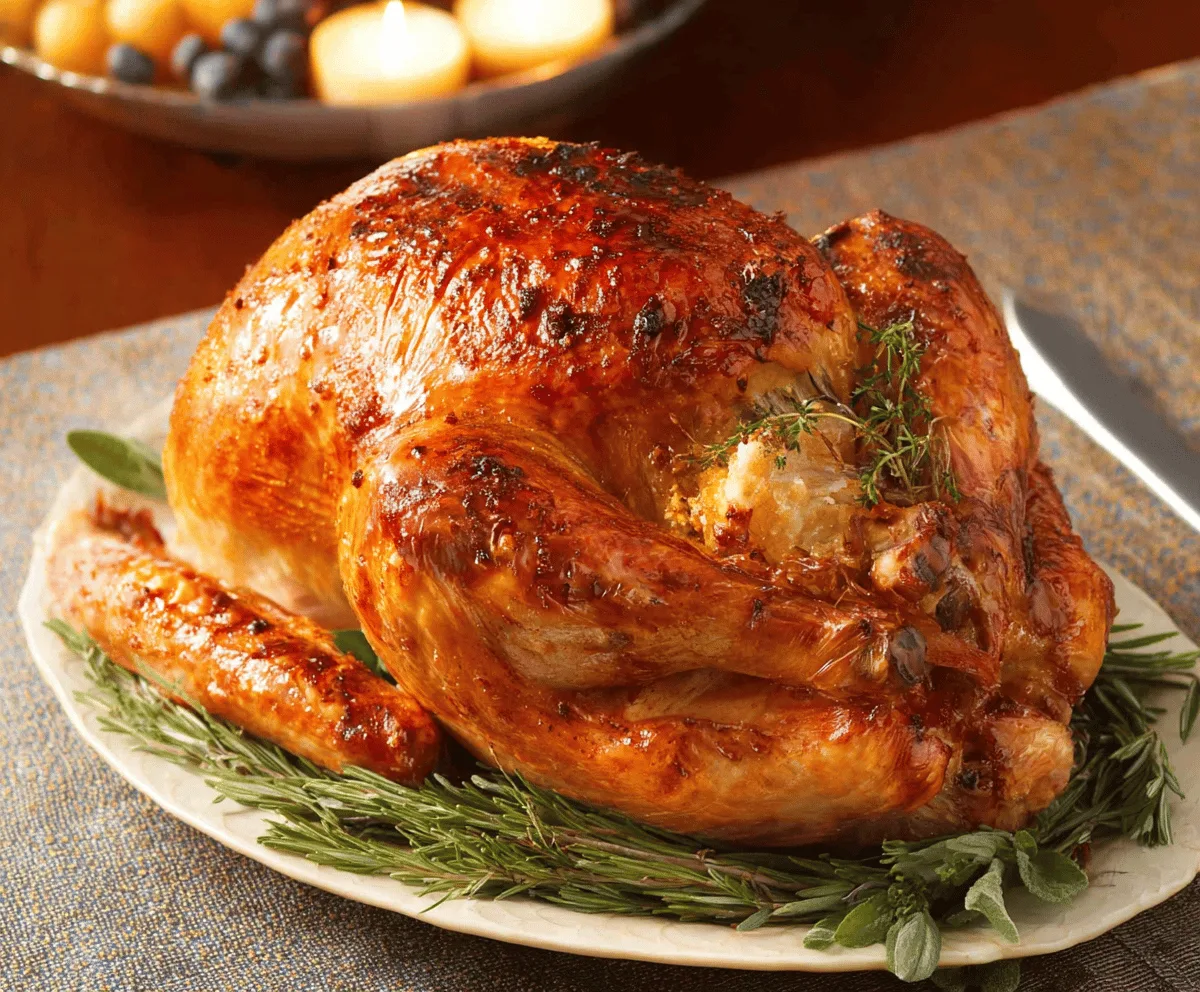
Roast turkey is a classic dish that fills the kitchen with the most wonderful aroma and promises a delicious, hearty meal. The crispy golden skin contrasts beautifully with the tender, juicy meat inside, making it a favorite for big family gatherings and festive dinners. Whether it’s Thanksgiving, Christmas, or just a special weekend meal, a well-roasted turkey always feels like a celebration in every bite.
I’ve found that the key to a great roast turkey is to keep things simple and let the natural flavors shine. A little butter or olive oil rubbed under the skin and some herbs like rosemary, thyme, and sage go a long way. I like to stuff the cavity with aromatics like garlic and onion to add a bit of extra flavor. One tip I swear by is to let the turkey rest after roasting — it really helps keep the meat juicy and makes carving so much easier.
Serving roast turkey is a joy because it pairs so well with a bunch of classic sides like mashed potatoes, gravy, cranberry sauce, and roasted vegetables. I often enjoy it with a simple green salad or even some fresh bread to soak up any leftover juices. Bringing everyone around the table to share this meal is one of my favorite parts about making roast turkey — it’s not just about the food but the warm, cozy moments you create together.
Key Ingredients & Substitutions
Turkey: A fresh or fully thawed whole turkey is best. If you can’t find a large bird, smaller turkeys or turkey breasts work, but adjust cooking times accordingly.
Butter and Herbs: Butter adds richness and helps brown the skin. For a dairy-free option, use olive oil. Fresh herbs like thyme, rosemary, and sage give a lovely aroma, but dried herbs can be used if needed—just use less.
Onion, Lemon & Garlic: These aromatics inside the cavity boost flavor from within. You can swap lemon for orange or add celery stalks for variety.
Chicken Broth or Water: Adding liquid to the pan keeps the environment moist and prevents drippings from burning. Broth makes a richer base for gravy, but water works fine too.
How Do I Get Crispy, Golden Skin Without Drying Out the Meat?
The key here is balancing moisture and heat. Here’s what I do:
- Pat the turkey dry thoroughly before seasoning to help the skin crisp up.
- Loosen the skin and rub herb butter underneath to keep the breast meat juicy.
- Roast low and slow first (around 325°F) to cook gently without drying.
- Raise the oven temperature near the end (to 425°F) to brown and crisp the skin beautifully.
- Let the turkey rest after roasting; this locks in moisture and makes carving easier.
Following these tips helped me avoid dry meat while getting that beautiful, crispy skin we all want!
Equipment You’ll Need
- Roasting pan with rack – I like it because it holds the turkey steady and promotes even cooking.
- Kitchen twine – helps tie up the legs nicely for even roasting and presentation.
- Meat thermometer – essential for checking when the turkey reaches 165°F and stays juicy.
- Basting brush or spoon – to baste the turkey with pan juices during cooking, keeping it moist.
- Large mixing bowl – for mixing the herb butter and stuffing the cavity.
Flavor Variations & Add-Ins
- Stuff the cavity with fresh herbs, apple slices, or even stuffing to add extra flavor and moisture.
- Use different herbs like tarragon or oregano for a unique aroma.
- Brush the skin with honey or maple syrup during the last 15 minutes for a sweet, shiny glaze.
- Add vegetables like carrots, celery, and potatoes around the turkey for a full meal in one pan.
Classic Roast Turkey Recipe
Ingredients You’ll Need:
- 1 whole turkey (12 to 14 pounds), thawed if frozen
- 1/2 cup unsalted butter, softened
- 2 teaspoons salt
- 1 teaspoon black pepper
- 1 tablespoon fresh thyme leaves, chopped (or 1 teaspoon dried thyme)
- 1 tablespoon fresh rosemary, chopped (or 1 teaspoon dried rosemary)
- 1 tablespoon fresh sage, chopped (or 1 teaspoon dried sage)
- 1 large onion, quartered
- 1 lemon, halved
- 1 head garlic, halved horizontally
- 2 cups low-sodium chicken broth or water (for the roasting pan)
- Fresh herbs (thyme, rosemary, parsley) for garnish
Time You’ll Need:
Plan for about 30 minutes to prepare the turkey and 2.5 to 3 hours to roast, depending on the size. Don’t forget to let it rest for 20-30 minutes after roasting to keep it juicy and make carving easier.
Step-by-Step Instructions:
1. Get Ready and Preheat
Take your turkey out of the fridge and let it sit at room temperature for about 30 minutes. Meanwhile, preheat your oven to 325°F (165°C).
2. Prepare Your Turkey
Remove the neck and giblets from inside the turkey. Use paper towels to pat the turkey dry — this helps the skin get crispy.
3. Make Your Herb Butter
In a small bowl, mix together softened butter, salt, pepper, thyme, rosemary, and sage. This flavorful butter will keep your turkey moist and tasty.
4. Apply the Butter
Gently slide your hand under the turkey’s skin over the breast to loosen it. Spread half of the herb butter under the skin right on the meat. Then rub the rest all over the outside of the turkey.
5. Stuff and Tie
Put the onion quarters, lemon halves, and garlic inside the turkey cavity. Tie the legs together with kitchen twine and tuck the wing tips under the bird to keep everything tidy.
6. Roast Your Turkey
Place the turkey breast-side up on a rack in your roasting pan. Pour the chicken broth or water into the pan to keep the oven nice and moist. Roast for about 13-15 minutes per pound, occasionally basting with pan juices.
7. Brown the Skin
About 45 minutes before the turkey is done, turn up the oven to 425°F (220°C). This step crisps and browns the skin beautifully.
8. Check for Doneness
Use a meat thermometer in the thickest part of the thigh (without touching bone). When it reads 165°F (74°C), your turkey is perfectly cooked.
9. Let It Rest
Take the turkey out of the oven and loosely cover it with foil. Let it rest for 20 to 30 minutes. This helps the juices settle, making your meat tender and juicy.
10. Carve and Serve
Slice up your turkey and garnish with fresh herbs. Enjoy your delicious, homemade roast turkey!
Can I Use a Frozen Turkey for This Recipe?
Yes! Just be sure to fully thaw the turkey in the refrigerator before cooking. Depending on size, allow about 24 hours of thawing per 4-5 pounds. Pat it dry thoroughly before roasting to help the skin crisp up.
How Should I Store Leftover Turkey?
Cool leftovers promptly and store them in airtight containers in the refrigerator. They’ll keep well for up to 3-4 days. Reheat gently to maintain moisture, either in the oven or microwave with a cover.
Can I Roast a Turkey Without Stuffing the Cavity?
Absolutely! You can roast the turkey plain or add herbs and aromatics under the skin instead. Stuffing the cavity adds extra flavor but is optional. Just be sure to adjust cooking times slightly if you add any stuffed ingredients inside.
How Do I Know When My Turkey Is Done?
The safest and most reliable method is using a meat thermometer. Insert it into the thickest part of the thigh without touching bone; it should read 165°F (74°C). This ensures the turkey is fully cooked and safe to eat.